2026-08-27 ·
Signs Your Leach Field Is Failing in New Mexico's Desert Soil
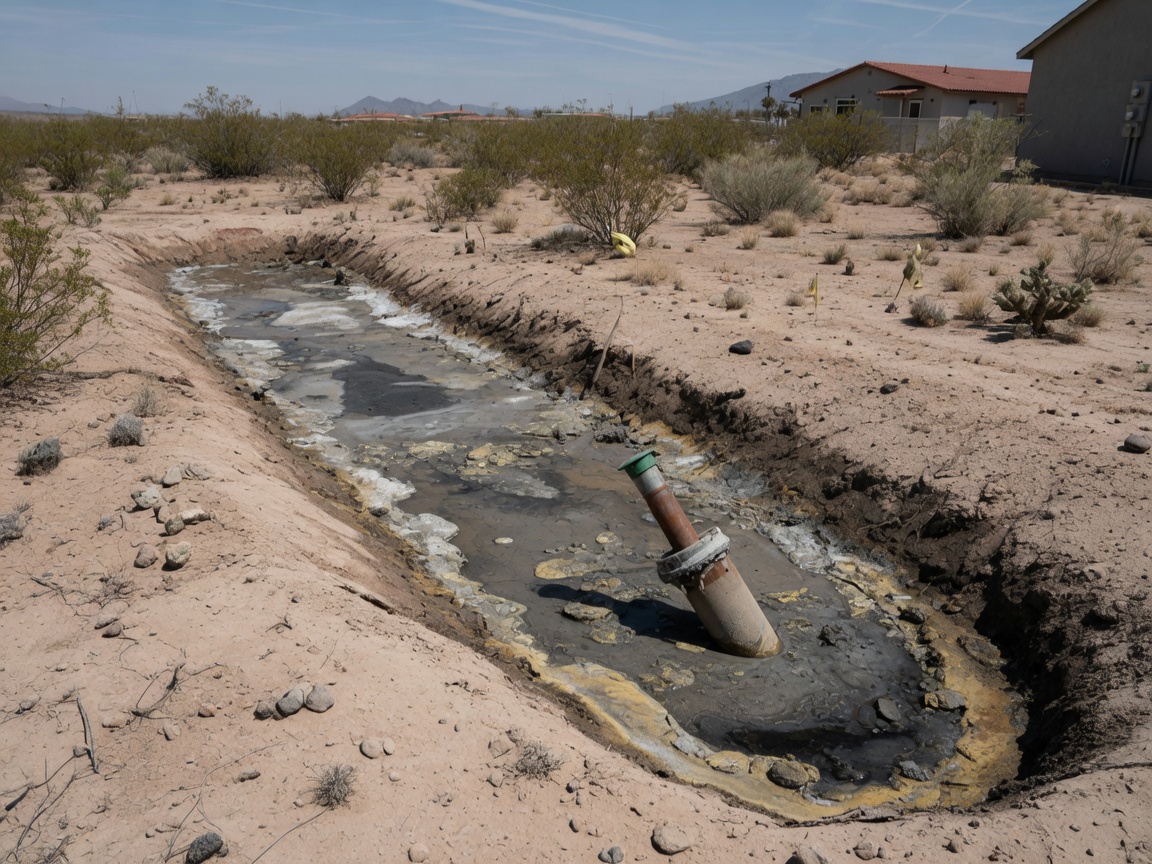
In Rio Rancho's high desert soil, the most common early signs of leach field failure include slow drains in multiple fixtures, sewage odors near the drain field, and soggy patches in the yard even during dry spells. These appear because the sandy, low-organic soils around neighborhoods like Northern Meadows and Cabezon drain too quickly at first then compact over time, reducing absorption capacity after 8-15 years of use.
Visible Surface Indicators in High Desert Yards
Homeowners in areas such as Loma Barbon often notice greener grass strips or standing water above the leach lines after heavy summer rains, even though the rest of the yard stays arid. This happens because the desert soil's low clay content allows initial percolation but fails to distribute effluent evenly once biomat builds up. Mild winter temperatures rarely freeze lines, yet sudden thaws after cold nights can push backed-up water to the surface near Santa Ana Star Casino properties. Checking for these wet spots right after a storm reveals problems before they reach the house foundation. Regular visual scans every few months catch issues while they remain localized to one section of the field rather than the entire system.
Drainage and Odor Clues Specific to Sandoval County
Slow toilet flushing or gurgling sinks that worsen during peak summer water use point to partial clogs in the distribution box, common in homes built on the gravelly lots near High Resort Golf Course. Sewage smells drifting from the yard intensify when hot afternoons evaporate surface moisture and concentrate gases. In Mariposa, residents report these odors traveling farther because open terrain and steady winds carry them across neighboring properties. Albuquerque and Santa Fe commuters sometimes mistake these smells for municipal sewer issues, but they originate from septic lines that have lost permeability in the alkaline desert soil. Tracking when odors peak relative to household water use helps isolate whether the problem sits in the tank or the field itself.
Soil and Climate Effects on Field Longevity
New Mexico's high desert climate with hot summers and mild winters accelerates biomat formation because evaporation concentrates solids faster than in humid regions. The coarse sand and caliche layers typical around Northern Meadows allow rapid initial drainage but leave little room for root penetration or microbial breakdown once the field ages. Properties near Lomas Encantadas face extra stress from occasional monsoon runoff that compacts soil and reduces oxygen exchange. These conditions shorten effective field life compared to systems farther north in Santa Fe County. Homeowners who notice recurring wet areas after only 10 years of service usually trace the issue to skipped maintenance rather than installation defects.
Next Steps When Signs Appear
Schedule a septic inspection as soon as multiple signs show up together, because waiting often leads to full field replacement. Review the guide on how often to pump your septic tank in Sandoval County to understand how pumping frequency protects the leach lines. In some cases, targeted leach field restoration can extend life without digging up the entire yard. Systems serving homes in Cabezon and Northern Meadows benefit most from early intervention before effluent reaches the surface near driveways or play areas.